
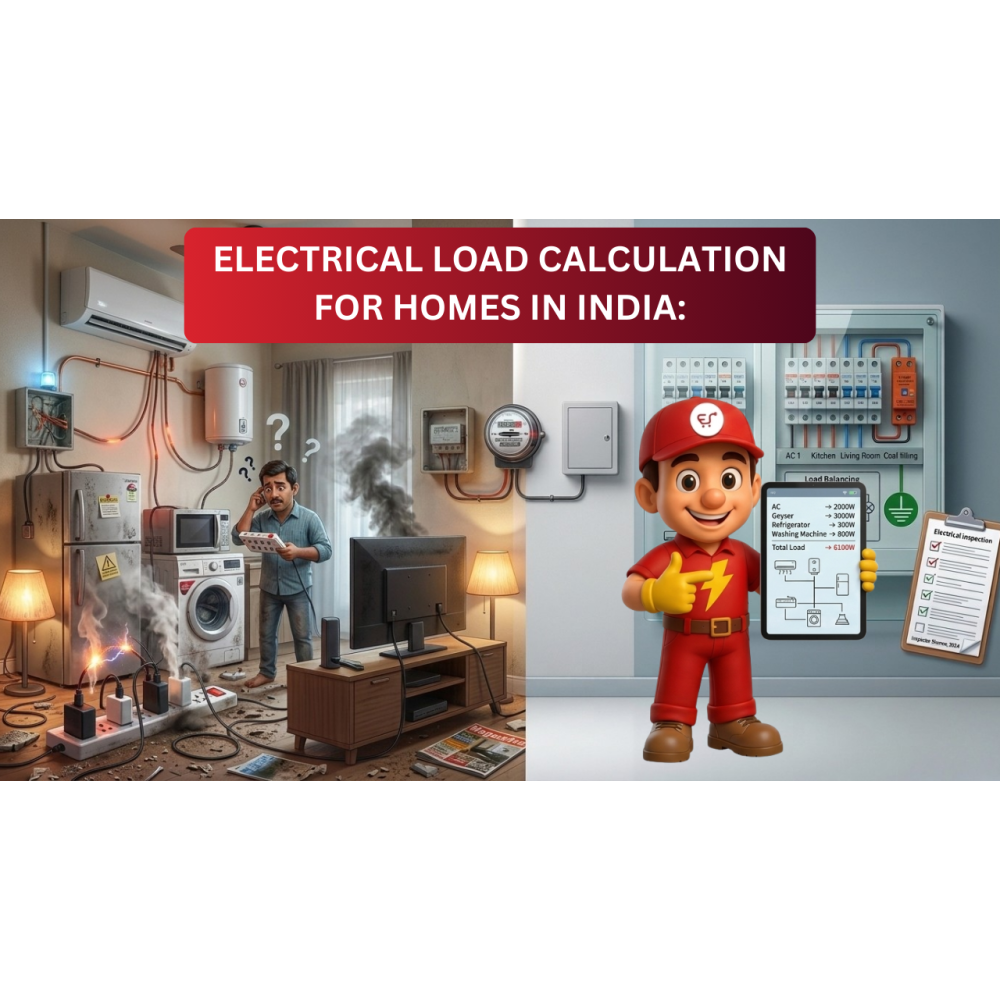
In most Indian homes, electrical problems rarely start as big failures.
They start small.
A switch stops working.
A socket becomes loose.
A fan wire sparks for a moment.
An appliance is added using a temporary connection.
Usually someone says, “Chalta hai, kal dekh lenge.”
But electrical systems don’t ignore these small things. They slowly build up risk.
Many household electrical accidents happen not because of complex technical failures, but because the right materials were not available when they were needed.
A loose joint.
Improper wire.
Cheap tape.
Temporary fixes that become permanent.
Electrical safety is not only about major rewiring.
It is also about being prepared for small everyday electrical situations.
The Reality of Electrical Problems in Indian Homes
Small electrical issues are common in almost every house.
A switchboard becomes loose.
A socket stops holding the plug properly.
A fan connection starts heating.
An appliance wire needs replacement.
Temporary wiring is done during renovation.
At that moment, people usually manage using whatever is available at home or nearby.
Often that means:
Using thin wire for heavy load
Joining wires by twisting them together
Wrapping joints with poor-quality tape
Using leftover wires from old appliances
Making temporary connections that stay for years
These quick fixes may work temporarily, but they quietly increase electrical risk.
What Most Homeowners Never Think About: Electrical Load
When people buy appliances, they usually check:
Price
Brand
Warranty
Electricity consumption
But one question is rarely asked.
Can my home wiring actually handle this appliance safely?
Every appliance increases electrical load.
One AC may not cause a problem.
But when AC, geyser, microwave, washing machine, and refrigerator run together, the wiring in many homes begins to struggle.
Even small electrical changes can affect local wiring load if the materials used are not correct.
Why Every Home Should Keep a Basic Electrical Necessity Pack
Indian homes usually keep emergency items like:
First-aid kits
Tool kits
Torch lights
Extension boards
But very few homes keep basic electrical materials.
A small electrical necessity pack can help in situations like:
Minor electrical repairs
Safe temporary connections
Emergency fixes
Supporting electricians during repairs
Avoiding unsafe improvisation
The goal is not DIY electrical work, but ensuring that safe materials are available when electrical work happens at home.
Homes That Need an Electrical Necessity Pack the Most
While every home benefits from it, some homes face higher electrical risk.
Homes with wiring older than 5–10 years
Homes where appliances are added frequently
Rental homes with unknown wiring quality
Homes with children or elderly people
Homes undergoing renovation or interior work
Homes running ACs, geysers, or inverters
In reality, this describes a large number of Indian households today.
Basic Electrical Materials Every Home Should Have
A basic electrical necessity pack should include essential items commonly required during electrical work.
Correct gauge electrical wires for common uses
Good quality insulation tape
Cable ties for wire management
Saddles for proper wire support
Electrical lugs for safe connections
Heat shrink sleeves for proper joint insulation
Basic connectors for temporary work
Spare MCBs for quick replacement
When these items are not available, electricians often have to work with whatever material is available at home or nearby shops.
That is when unsafe shortcuts happen.
Why Using the Correct Wire Size Is Critical
One of the most common electrical mistakes in homes is using the wrong wire size.
Incorrect wire size can cause:
Overheating
Melting insulation
Short circuits
Electrical fires
Different electrical points require different wire capacities.
Low-load control wiring
Lighting and fan circuits
Power sockets
Heavy appliances
Inverter and battery connections
Using random wires for all applications increases risk significantly.
How Electric Ji Solves This with Ready-to-Use Bundle Packs
Most homeowners are not expected to understand wire sizes or electrical accessories.
That confusion often leads to incorrect purchases or unsafe materials.
Electric Ji simplifies this by offering pre-planned electrical bundle packs designed for common household needs.
These packs ensure the correct combination of wires and accessories is available when electrical work happens.
Electric Ji’s Electrical Bundle Packs Explained
Light & Control Wiring Packs (0.5 - 1 sqmm)
Used for low-load circuits such as:
Doorbells
Sensors
LED strip lighting
Control wiring
Suitable for small signal and control connections.
Lighting & Fan Wiring Essentials (1.5 sqmm)
Commonly used for:
Ceiling fans
Tube lights
Regular lighting circuits
This is one of the most widely used wire sizes in homes.
Power Socket & Plug Point Packs (2.5 sqmm)
Used for :
5A and 16A sockets
Kitchen appliances
Refrigerators
Microwaves
Mixers
These circuits require stronger wiring to avoid overheating.
Heavy Appliance Wiring Packs (4 sqmm)
Designed for higher electrical demand such as:
Geysers
Air conditioners
Water pumps
These appliances draw higher current and require stronger wiring.
Inverter & Battery Wiring Packs (6 sqmm)
Used for :
Inverter battery connections
UPS systems
High-load backup setups
Correct wire size here prevents battery overheating and power loss.
Professional & Renovation Kits (Multi-Size Packs)
Useful during:
Room renovation
Complete wiring upgrades
Mixed electrical work
These packs contain multiple wire sizes and accessories for different needs.
Why These Packs Improve Home Electrical Safety
Correct wire size for each electrical application
Proper accessories reduce loose connections
Wiring becomes cleaner and more secure
Fire and shock risk decreases
Electricians can work faster and more safely
No last-minute compromises
Electrical safety improves when the right materials are available at the right time.
How Electric Ji Improves Electrical Safety Beyond Products
Electric Ji is not only about selling wires and accessories.
It focuses on improving electrical safety in homes.
Access to Trained Electricians
Electric Ji connects homeowners with electricians who understand:
Electrical load management
Correct wiring practices
Safe installation methods
Avoiding risky shortcuts
One Platform for Products and Services
Homeowners often face two separate problems.
Finding correct electrical materials
Finding a reliable electrician
Electric Ji combines both in one platform.
Safety Awareness for Homeowners
Electric Ji also focuses on educating homeowners so they can:
Understand electrical risks
Recognize warning signs early
Choose safer materials
Avoid unsafe temporary fixes
What Happens When Homes Don’t Keep Basic Electrical Materials?
Unsafe temporary wiring becomes permanent.
Electricians are forced to improvise.
Fire and shock risks increase.
Appliance lifespan reduces.
Repair costs become higher later.
Small negligence today often leads to bigger electrical problems tomorrow.
Final Thought
Electrical safety at home is not only about large rewiring projects.
It is also about everyday readiness.
Every home should:
Understand its electrical load
Check wiring condition regularly
Keep a basic electrical necessity pack
Use correct wire sizes and accessories
Rely on trained electricians for installation
Electric Ji aims to make Indian homes safer by combining :
Electrical knowledge
Correct materials
Ready-to-use bundle packs
Verified electricians
Electrical safety is not about reacting after accidents happen. It is about preventing them before they happen.
FAQs
1. What is the electrical load in a home?
Electrical load is the total amount of electricity used by all appliances and electrical points in a house. When multiple appliances run together like AC, geyser, refrigerator, and washing machine, the combined demand becomes the home's electrical load.
2. Why is electrical load calculation important for homes in India?
Many homes add new appliances without checking whether the wiring and MCB capacity can handle the extra load. This can lead to overheating wires, tripping breakers, or electrical fires.
3. How do I know if my home wiring can handle more appliances?
Signs include frequent MCB tripping, dimming lights when appliances start, overheating switchboards, or burning smells from electrical points. These indicate the wiring may be overloaded.
4. What happens when electrical load exceeds wiring capacity?
If load exceeds wiring capacity, wires may overheat, insulation may melt, MCBs may trip repeatedly, and in extreme cases it can lead to short circuits or electrical fires.
5. How many appliances can run safely in a typical Indian home?
It depends on the wiring size, MCB rating, and distribution board capacity. Older homes may struggle when multiple heavy appliances like ACs, geysers, and microwaves run together.
6. Why do electrical problems often start small?
Most electrical issues begin with minor signs such as loose sockets, flickering lights, or sparking wires. Ignoring these early warnings allows problems to grow into serious hazards.
7. What is an Electrical Safety & Necessity Pack for homes?
An Electrical Safety & Necessity Pack is a collection of basic electrical materials like wires, insulation tape, connectors, and accessories that help handle minor electrical situations safely.
8. Why should every home keep basic electrical materials?
Having essential electrical materials ready prevents unsafe improvisation like twisting wires together or using poor-quality tape during repairs.
9. What items should be included in a basic electrical necessity pack?
A typical pack may include insulation tape, electrical wires of different sizes, cable ties, saddles, lugs, connectors, heat shrink sleeves, and spare MCBs.
10. Can homeowners do electrical repairs themselves using these materials?
Electrical work should ideally be done by trained electricians. The purpose of keeping these materials is to ensure safe components are available when electrical work happens.
11. What are the most common electrical mistakes in Indian homes?
Common mistakes include using thin wires for heavy appliances, loose wire joints, poor insulation, temporary connections becoming permanent, and overloaded extension boards.
12. Why is wire size important in home wiring?
Different appliances draw different amounts of current. Using a wire that is too thin for a high-load appliance can cause overheating and insulation damage.
13. What wire size is commonly used for lighting and fan circuits?
Most lighting and fan circuits in homes use 1.5 sqmm wire, which is suitable for moderate electrical loads like lights and ceiling fans.
14. What wire size is used for plug points and power sockets?
Power sockets, especially 16A sockets used for kitchen appliances, typically require 2.5 sqmm wiring to handle higher electrical demand safely.
15. Which appliances require heavy electrical wiring?
Appliances such as air conditioners, geysers, water pumps, and large kitchen appliances require thicker wiring like 4 sqmm or higher depending on the load.
16. Why do MCBs trip frequently in some homes?
Frequent tripping usually indicates overloaded circuits, faulty appliances, loose wiring, or incorrect MCB ratings.
17. How often should home electrical wiring be inspected?
Ideally, homes should have an electrical inspection at least once every year to check wiring condition, load distribution, and safety devices.
18. Are older homes at higher electrical risk?
Yes. Homes with wiring older than 10–15 years may not be designed for modern appliances like ACs, induction stoves, and multiple electronics.
19. What role does an electrician play in electrical safety?
A trained electrician ensures correct wire size, proper connections, safe load distribution, and proper installation of protection devices like MCBs and earthing.
20. How can homeowners improve electrical safety in their homes?
Homeowners can improve safety by avoiding temporary wiring fixes, using correct electrical materials, checking electrical load before adding appliances, and relying on trained electricians for installation and repairs.